
The h.wood Group will open a signature restaurant and an exclusive private members club at Viceroy Residences Fort Lauderdale in Flagler Village, the result of a partnership announced on January 23 between Los Angeles hospitality operator h.wood and the building's developer, Naftali Group. The PR Newswire announcement details the 15,000-square-foot combined footprint and the membership model; The Browardist's followup confirms the h.wood team's pedigree from Delilah, The Nice Guy, and Harriet's.
The format separates the public restaurant from the members-only club. The signature restaurant operates with premium American and Italian cuisine and craft cocktails on its own service track, open to both Viceroy residents and outside guests through standard reservations. The private members club occupies a separate footprint inside the same 15,000-square-foot envelope, with its own dedicated menu, lounge areas, and scheduled cultural-and-social programming that runs on a regular schedule for members and approved guests.
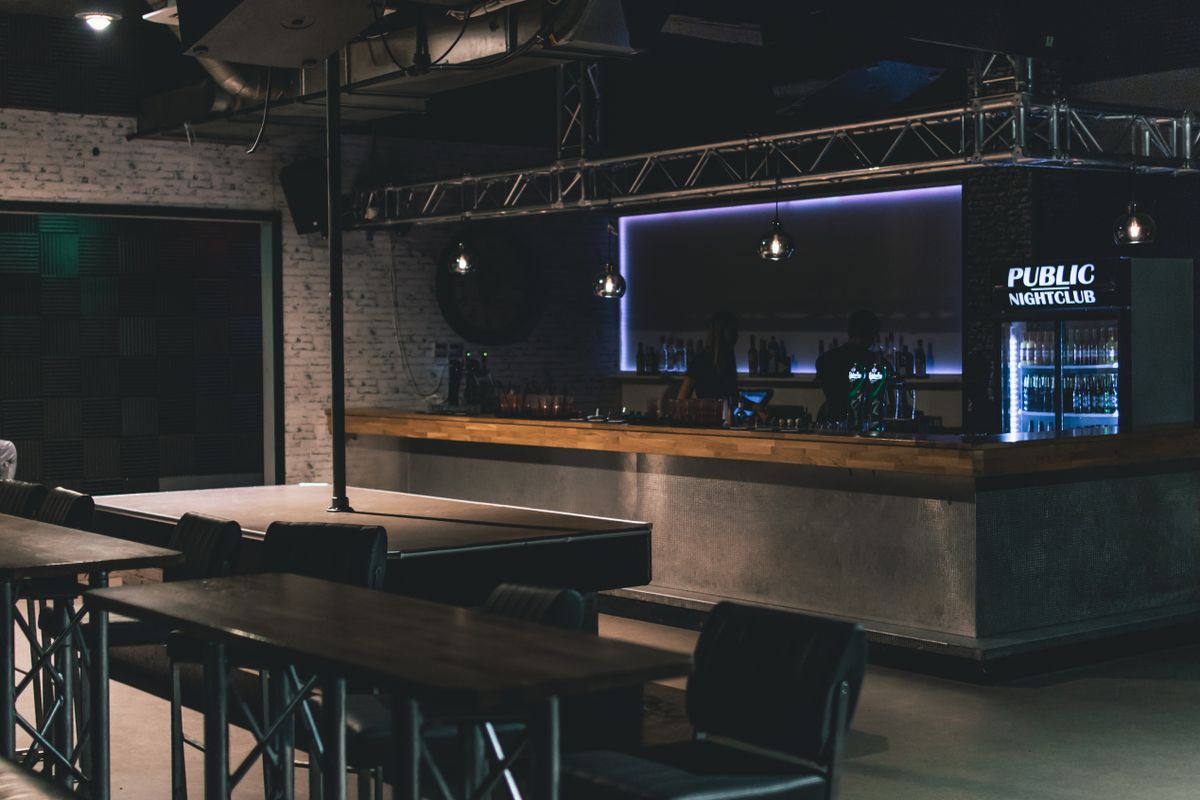
Viceroy residents receive membership as part of their ownership of the building, which means that the private club functions as a residential amenity layered onto h.wood's standalone operating model. The membership-with-residence configuration is uncommon in South Florida; most private members clubs in the region operate as independent operations with their own membership lists. The Viceroy approach mirrors what h.wood has tested in Los Angeles with its hotel-and-private-club partnerships, though the South Florida deployment is the company's most explicit residential-tied configuration to date.
The h.wood Operating Playbook
The h.wood Group runs some of Los Angeles's better-known hospitality operations. Delilah, the Sunset Strip supper club, has been a fixture of the West Hollywood entertainment-industry dining scene since opening in 2016. The Nice Guy on La Cienega Boulevard runs as a paparazzi-magnet Italian restaurant and lounge. Harriet's, h.wood's rooftop at the 1 Hotel West Hollywood, layered the brand's nightlife sensibility onto a hotel rooftop format and proved out the company's playbook for hospitality partnerships with developers. The Fort Lauderdale Viceroy partnership is the company's first major Florida deployment.
The operating playbook reads consistently across h.wood's properties: a tightly programmed cocktail list, a menu of premium American and Italian classics, a dining room that programs for both photo-friendly visual identity and ambient sound levels suited to conversation, and an attention to the door — who walks in, when, and how — that the rest of the LA dining scene has built into the standard playbook for premium hospitality. The Fort Lauderdale deployment will run the same template, calibrated for the South Florida visitor and resident mix.
The Viceroy Residences building itself sits in Flagler Village at the corner where the neighborhood meets Downtown Fort Lauderdale's emerging luxury residential corridor. The 45-story tower is part of Naftali Group's expanding Florida portfolio; the developer's roster of New York condominium projects and recent Florida acquisitions gives the partnership the operational scale to launch the dual restaurant-and-club format at the scope the h.wood team requires.
Flagler Village's Trajectory and What the Partnership Signals
Flagler Village has been one of Fort Lauderdale's fastest-changing neighborhoods over the past five years. The corridor immediately north of Las Olas has filled in with a mix of mid-rise residential, ground-floor restaurants, art-gallery storefronts, and the residential conversions of warehouses that gave the neighborhood its character through the 2010s. The Viceroy tower is among the tallest new constructions in the neighborhood and represents a step-change in the scale of residential product the corridor can support.
The h.wood partnership signals what Naftali Group is positioning the building for. The membership-tied amenity model targets a buyer profile that prioritizes hospitality access alongside the residential product — a niche that the South Florida luxury condominium market has been moving toward as the region's hotel-residence hybrid model has matured. The Viceroy Residences positions the dual restaurant-and-club operation as the building's primary amenity differentiator; the partnership's premium-LA pedigree is the marketing lead.
The membership model and the public restaurant's relationship to it is the operational question that the launch will resolve. The current pattern at h.wood's LA operations balances the public-restaurant flow against the private-membership traffic by programming distinct menus, distinct service teams, and distinct cocktail lists; the Fort Lauderdale deployment will run the same separation. The membership pricing and the application process have not been disclosed; the h.wood team has signaled that the membership will be tightly controlled but has not yet published the specific terms.
A specific opening date has not been announced. Construction on the Viceroy Residences building continues; the h.wood operation will fit into the building's tenant-improvement timeline once the structural and core-and-shell work concludes, which the development team has not yet publicly fixed.


